In Conclusion...
Assuming the role of an historian and studying history through a photojournalistic lens has taught me many things. I have discovered that the definition of photojournalism outlined in the introduction as found in the Merriam- Webster Dictionary Online as, “the job or activity of using photographs to report news stories in magazines or newspapers” is only part of the overall picture of photojournalism. The above definition makes photojournalism seem so “black and white”, and boring. I have come to discover that photojournalism is anything but the “black and white” reporting of events.
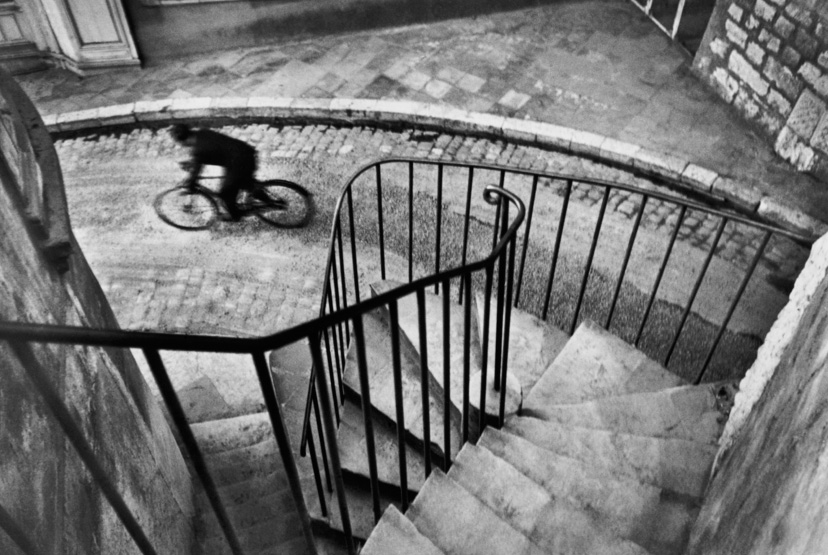
Photojournalism is alive and electric, as in the photographs of Mark Peterson. Photojournalism is art, like the photographs of Henri Cartier-Bresson.
Photojournalism is emotion, imagination, hurt, heartbreak and devastation, the reporting of facts, biased perceptions, ever changing, and most importantly, the pulse of our modern human culture. It is important to know the history of photojournalism when examining and deconstructing events. Knowing the history helps us to make sense of present photojournalistic trends and patterns. Furthermore, by knowing where the field of photojournalism has been, we can gain a greater appreciation for where the field is today, both in terms of style and technology.
There were many times during the examination of images that I made astounding connections to background knowledge that I had forgotten that I had even known. For example, while working on the chapter on Ethics and examining photographs from the Civil War, I was able to recall facts and relate the photographs to prior knowledge.
One big "ah ha" moment that I had was when we began to examine photographs and photojournalists that had more artistic styles, and weren't simply reporting on conflicts, issues, ans news. I had never realized that the lines of photojournalism were blurred with other forms of photography, such as fashion, art, and nature photography. Although looking back now, it seems fairly obvious to me!
 |
Photo by: NASA
Source: NASA |
It’s still my belief that photographs change the world. They can either change the world on a large scale, and possible cause social change, or they can change the world on a small scale, perhaps the world of an individual. The photograph on the left of the astronaut on the Moon certainly helped to change the spirit of our country. Photographs have the power to educate and to cause us to question our beliefs and motivations. Images have the ability to impact us powerfully on a visceral level based on our own personal experiences, backgrounds and beliefs.
The creative experiential exercise that we conducted helped to synthesize the course content. Taking on the role of photojournalist and photographing Mother’s Day festivities at a busy local restaurant provided me with a better understanding of photojournalism.
 |
Patrons wait in a long line at Woodman's of Essex on
Mother's Day 2014
Image by: Michelle Travers |
Thinking about what moments were important, and what moments were essential to the accurate portrayal of the photo essay I sought to create. There were ethical considerations to take when I almost told the owner of the restaurant that I would not post her picture on the internet, which was really the point of taking the picture in the first place. However, she was a reluctant subject, so in the end I decided not to post her picture to this blog. Having decided to take it easy on the equipment (A.K.A. the “good camera”, or the DSLR) and since I also had my three year old in tow; I decided to use the technology on my iPhone to take photographs. After returning home and reviewing the photographs however, I wished that I did have my Nikon. While some of the photographs I took came out well, there were some that could have been nice if I had had a camera with a faster shutter speed so they wouldn't be blurry. There was one in particular which would have been a great photograph, however because of the bright sunny conditions I could not see that the sun had created a glare effect. I decided to post this picture to Instagram and use some of the funky filters to see what kind of interesting effects I could create.
.JPG) |
Instagram Experiment
Image by: Michelle Travers |
I saw first hand how technology impacts photojournalism. Some of the photographs I took would not have been possible to take with the earliest photographic technologies such as the Wet Plate Collodion process.
While reviewing the photographs from the event I began to better understand how bias played into the photographs I chose to take and to put in the “keep pile”, so to speak. I have been attending this event for countless years and have many fond memories as well as preconceived notions of what makes this event as charming as it is. I had the great fortune of having the owner of this family restaurant invite me into the family home, which is not open to the public for a quick tour and oral history. She let me take photographs inside this beautiful old home and explained the importance of some of the artifacts that could be found there.
 |
Inside the Woodman's home
Photo by: Michelle Travers
|
I was grateful and excited by what I had seen and learned, however in looking at all the photographs from the day, the ones from inside the house just didn’t fit, and I would make the creative decision not to include them in the final photo essay if I were to create one. Really, they are worthy of their own project. The photographs I took during the creative experiential exercise will not change the world on a large scale, but they changed mine, if only for a moment.
The following are selected images from the Creative Experiential Exercise.
 |
| Photo by: Michelle Travers |
 |
| Photo by: Michelle Travers |
 |
| Photo by: Michelle Travers |
 |
| Photo by: Michelle Travers |
 |
What's more American than Fried Clams?
Photo by: Michelle Travers |
 |
| Photo by: Michelle Travers |
 |
| Photo by: Michelle Travers |
 |
| Photo by: Michelle Travers |
 |
| Photo by: Michelle Travers |



No comments:
Post a Comment